Inkspots Blog

Uncategorized

The Five-Year Exhale

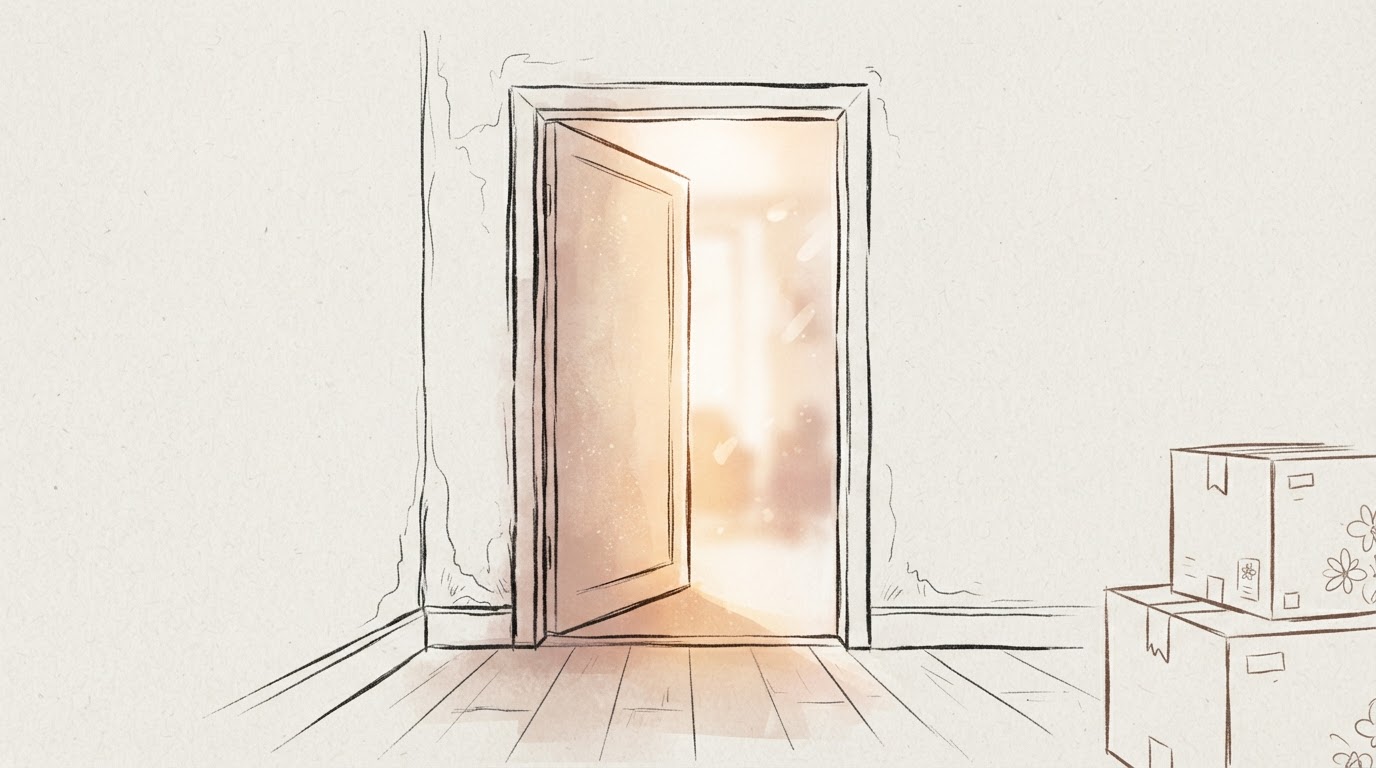
Writing the Quiet Boundary The tightness started in my throat, a knot of unspoken words that made every breath feel just a little too shallow. I was sitting at my desk today, surrounded by the physical chaos of packing up our lives into cardboard boxes, when I realized the heaviest thing I was carrying couldn’t be taped up and moved. For five years, I have lived in a state of suspended animation, wondering if I…

Continue reading

Inkspots Blog

The Box on the Form

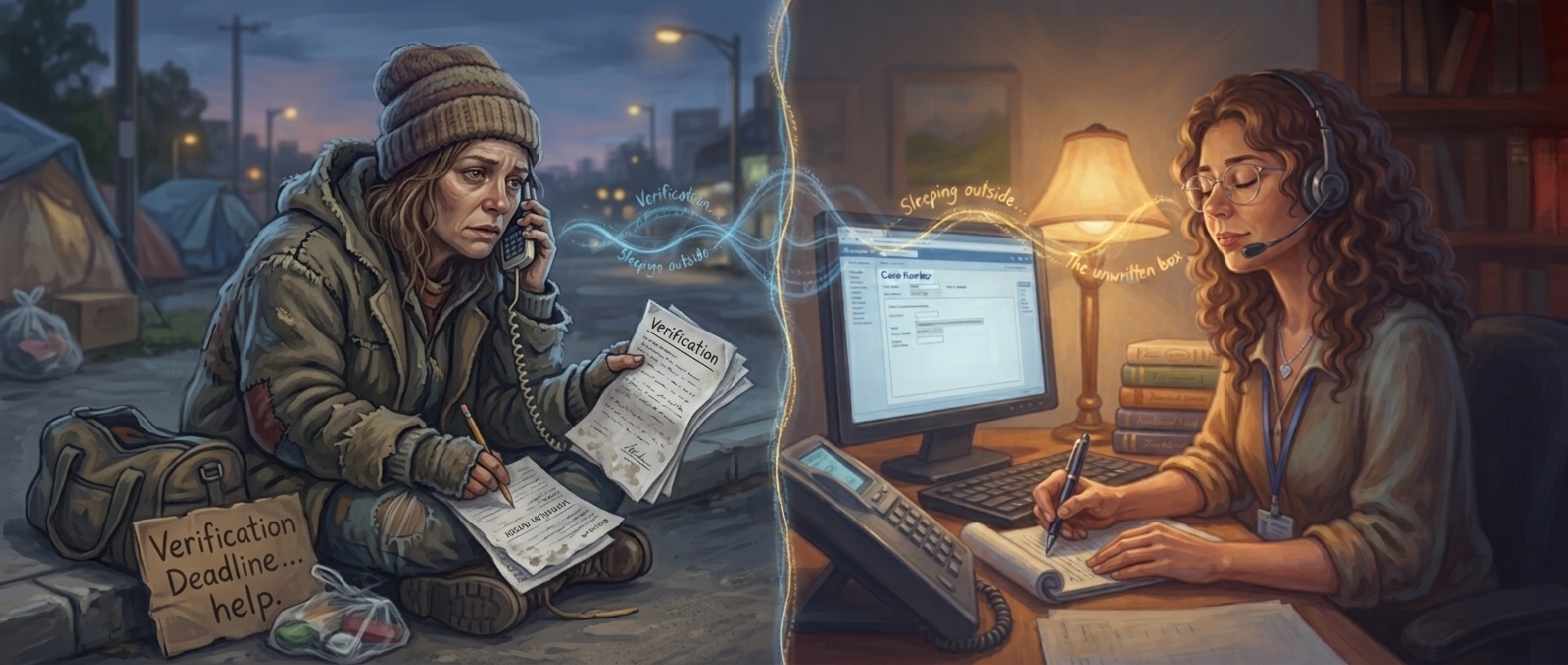
Somewhere in the middle of explaining why she couldn’t get that letter, she told me she was sleeping outside. She didn’t stop to let it land. She said it the way you’d mention a bus route, as context for why the mail was a problem, and then she went right back to asking about the verification. There is no box on the form for what she told me. That’s the part I keep turning over. People don’t lead with the real problem. They lead with the version of it that the room can receive.

Continue reading

Inkspots Blog

Writing Trauma Survivors Realistically

On trauma-informed care, administrative burden, and writing trauma survivors realistically — from behind an eligibility desk. A woman called on a Tuesday because her son’s dental coverage had closed. The appointment was in two days. Somewhere between the last review and this one, a form hadn’t been returned, a deadline had quietly passed, and a switch had flipped from open to closed — no malice in it, just the mechanics of a system doing exactly…

Continue reading

Inkspots Blog

How to Write Co-Regulation in Romance

A Craft Guide to Nervous System Safety on the Page A man is standing at my counter, and his voice has climbed an octave in the last ninety seconds. I don’t raise mine to match him. I slow down. I drop half a register. I say his name once, quietly, and wait. Somewhere around the fourth exchange, his shoulders come down an inch. That’s co-regulation: one nervous system lending its steadiness to another until the…

Continue reading

Inkspots Blog

What The Form Doesn’t Ask: Moral Injury, the Just-World Hypothesis, and the Cost of Proving You’re Struggling

What The Form Doesn’t Ask Yesterday I read a woman’s handwriting where I was expecting a job history. The field asked what work she’d done in the last thirty days. What she wrote instead was one line: sleeping on the streets. That’s not what the box was for. Nothing on that form was built to hold it. She wrote it anyway, because it was true, and because somewhere underneath all the boxes was a person…

Continue reading

Book Reviews

Watching, Waiting, Wanting: A Slow Burn Worth the Wait

Beneath the Surface by Mila Hart My rating: 5 of 5 stars Full disclosure: I got to read this one in an earlier draft, so watching it land in final form felt a little like watching a plant you helped stake finally bloom. And it blooms. Sloan Locke is a former Army sniper turned government contractor, which means her entire life has been built on one skill — watching without being watched. She retreats to…

Continue reading

Inkspots Blog

Writing Trauma Survivors in Fiction: What the Case File Doesn’t Ask

A note before you start: this piece references suicide disclosure, child loss, and family separation, drawn loosely from a year spent taking eligibility calls for the state of Indiana. No detail here identifies a real person — specifics have been altered and composited. If any of it lands hard, the 988 Suicide & Crisis Lifeline is available by call or text, 24/7. Writing trauma survivors in fiction started, for me, as a way of asking…

Continue reading

Inkspots Blog

5 Powerful Things I Learned About Writing a Person While Processing Someone Else’s Paperwork

I never see the people I talk to. Four years at DFR and every relationship I’ve had with a client has come through a phone line — no face, no hands, no room they’re sitting in. Just a voice, and whatever a voice decides to give me.
I had a call recently with a woman raising her four grandchildren. She’d already sent in the legal guardianship paperwork — the document that said, officially, permanently, these are mine to care for. But guardianship wasn’t enough to authorize SNAP and TANF. I needed birth certificates proving biological relationship, and she only had them for two of the four kids. And then, without my asking, her voice cracked, and she told me why: her son — their father — had died by suicide. That’s how she’d ended up with four grandchildren and a filing problem she was now expected to solve while grieving him.

Continue reading

Inkspots Blog

4 Powerful Lessons for Writing Trauma Survivors: What a Phone Line Taught Me About the Window of Tolerance

I never see the faces. That’s the thing nobody tells you about eligibility work until you’re three months in, headset creaking against your ear, a queue of calls stacking up behind the one you’re on. I hear breath catch. I hear a hold-music silence that goes on two seconds too long. I hear a voice go flat and careful in a way that has nothing to do with the SNAP application in front of us…

Continue reading