
The Fawn Response in Fiction: Writing a Yes That Isn’t
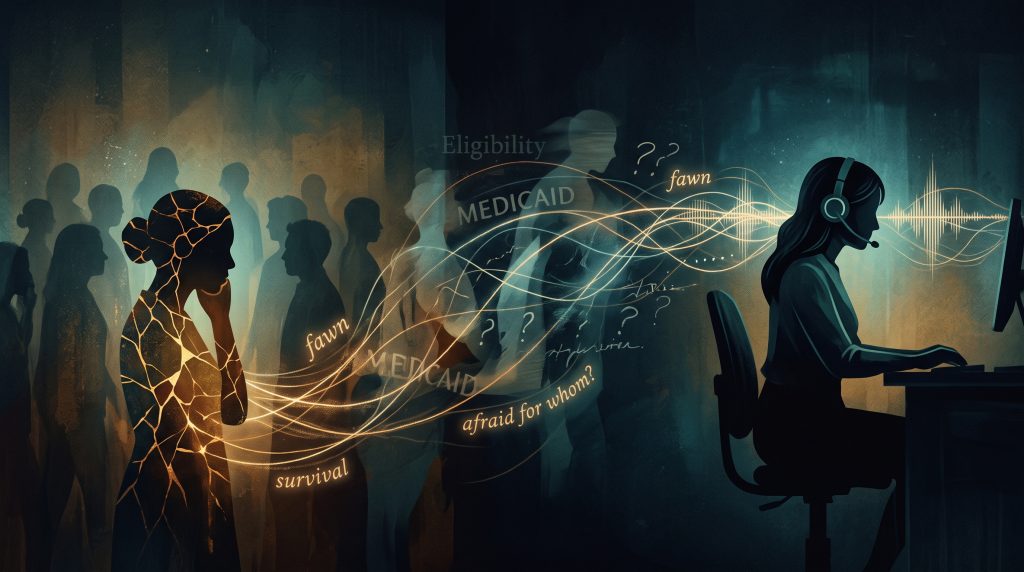
The woman on the line told me it was fine. Twice. The first time when I explained the packet needed to come back because the signature landed in the wrong box — a box nobody had told her client to skip. The second time when I said the backlog meant another two weeks before anyone could even look at the resubmission. Both times, the same bright, fast of course, I completely understand, thank you so much for explaining that — pitched a half-step too high, no pause before it arrived. The fawn response, if you know how to listen for it. I don’t sit across from clients anymore. I work the phones now, authorized representatives only — discharge planners, facility business office staff, the people hospitals and nursing homes designate to deal with Medicaid eligibility so the person in the bed doesn’t have to. But I still know that voice when I hear it. It isn’t agreement. It’s someone doing math in real time: is it safer to push back here, or to be easy.
What the Clipboard Can’t Hold: Trauma-Informed Practice at the Intake Desk

Every day, I sit across from human crisis and translate it into eligibility categories. The clipboard demands clean data—verified income limits, confirmed household compositions, calculated benefit determinations—while a messy, bleeding narrative spills out just beyond its edges. I’ve written before about the woman who told me she was sleeping outside as an aside, mid-sentence, on […]
Fifteen Minutes and a Headset

Fifteen Minutes and a Headset: Why People Fall Apart With Strangers She was doing fine until she wasn’t. That’s how it usually goes. The call opens with the recitation — the dates, the last paycheck, the hours cut, the number that has to be repeated twice because the connection is bad or because saying it […]
Writing Trauma Survivors Realistically

On trauma-informed care, administrative burden, and writing trauma survivors realistically — from behind an eligibility desk. A woman called on a Tuesday because her son’s dental coverage had closed. The appointment was in two days. Somewhere between the last review and this one, a form hadn’t been returned, a deadline had quietly passed, and a […]
What The Form Doesn’t Ask: Moral Injury, the Just-World Hypothesis, and the Cost of Proving You’re Struggling

What The Form Doesn’t Ask Yesterday I read a woman’s handwriting where I was expecting a job history. The field asked what work she’d done in the last thirty days. What she wrote instead was one line: sleeping on the streets. That’s not what the box was for. Nothing on that form was built to […]
5 Powerful Things I Learned About Writing a Person While Processing Someone Else’s Paperwork
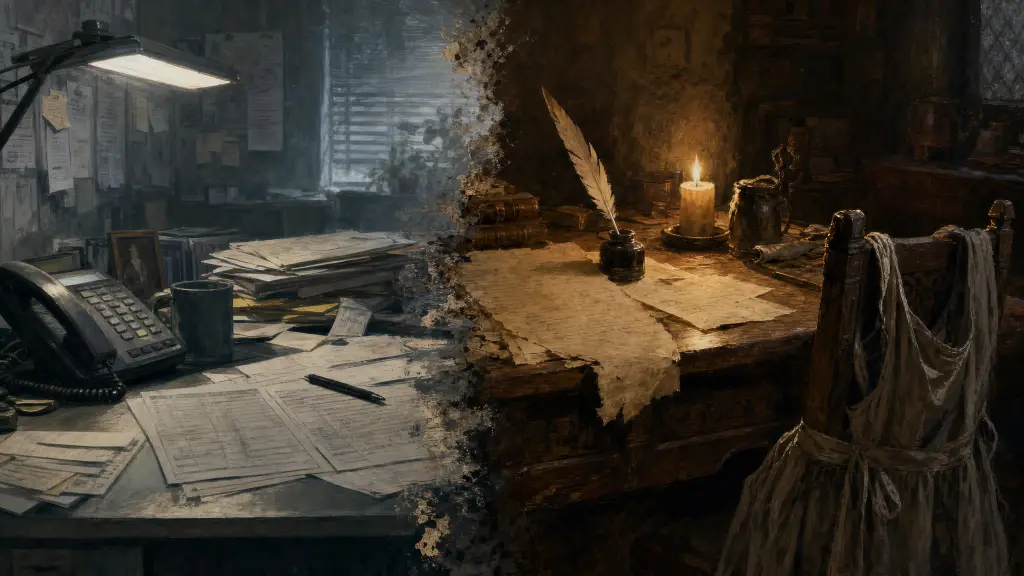
I never see the people I talk to. Four years at DFR and every relationship I’ve had with a client has come through a phone line — no face, no hands, no room they’re sitting in. Just a voice, and whatever a voice decides to give me.
I had a call recently with a woman raising her four grandchildren. She’d already sent in the legal guardianship paperwork — the document that said, officially, permanently, these are mine to care for. But guardianship wasn’t enough to authorize SNAP and TANF. I needed birth certificates proving biological relationship, and she only had them for two of the four kids. And then, without my asking, her voice cracked, and she told me why: her son — their father — had died by suicide. That’s how she’d ended up with four grandchildren and a filing problem she was now expected to solve while grieving him.
4 Powerful Lessons for Writing Trauma Survivors: What a Phone Line Taught Me About the Window of Tolerance

I never see the faces. That’s the thing nobody tells you about eligibility work until you’re three months in, headset creaking against your ear, a queue of calls stacking up behind the one you’re on. I hear breath catch. I hear a hold-music silence that goes on two seconds too long. I hear a voice […]
 English